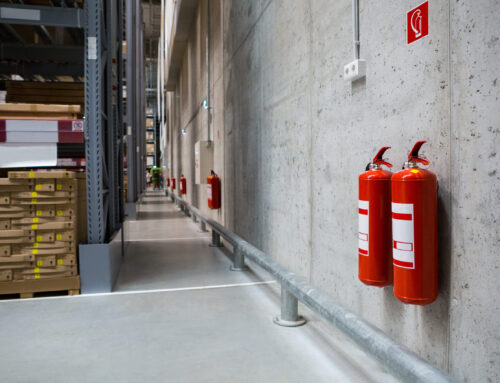
While property owners can perform monthly visual checks on their fire extinguishers, annual professional inspections by NFPA-certified technicians are required for compliance with fire codes and insurance requirements. This guide covers everything you need to know about getting your fire extinguisher properly inspected and maintaining life safety standards.
Fire extinguisher inspections are a critical component of building safety and fire suppression systems. While property owners can (and should) perform monthly visual checks to ensure their extinguishers are accessible and properly pressurized, annual inspections must be conducted by a certified fire protection professional to meet NFPA 10 standards. These professional inspections verify that your extinguishing agents, discharge hoses, pressure gauges, and safety seals are all functioning correctly, providing essential risk mitigation and ensuring your fire protection equipment is ready when you need it most.

Understanding the Types of Inspections
Fire extinguisher maintenance follows a tiered approach, with different inspection requirements based on time intervals and depth of examination. Understanding these distinctions helps ensure compliance with NFPA 10 standards and OSHA requirements while maintaining optimal fire safety.
Monthly Visual Inspections (D.I.Y. Steps)
Property owners and facility managers can perform basic monthly inspections to catch obvious issues. These visual checks take just a few minutes but play a vital role in life safety:
- Verify the fire extinguisher is in its designated location and easily accessible (not blocked by furniture, equipment, or stored materials)
- Check that the pressure gauge needle is in the green zone, indicating proper charge
- Inspect the pull pin and tamper seal to confirm they’re intact and undamaged
- Examine the discharge hose and nozzle for cracks, blockages, or visible damage
- Look for signs of physical damage such as dents, rust, or corrosion on the cylinder
- Ensure the HMIS label and operating instructions are legible
Document these monthly checks in your facility’s fire safety records. While monthly inspections don’t require professional certification, they demonstrate your commitment to fire hazard prevention and help identify potential issues before they become critical.
Annual Maintenance (Professional Requirement)
Annual inspections by certified fire protection technicians are mandatory under NFPA 10 standards and most local fire codes. These comprehensive examinations go far beyond visual checks:
- Complete physical integrity assessment of the cylinder and all components
- Verification that the extinguishing agent weight matches specifications
- Testing of mechanical parts, including the discharge valve and operating lever
- Documentation with dated inspection tags showing Fire Marshal approval
- Written inspection reports for your compliance records
Only certified technicians can affix official inspection tags. These tags serve as proof of OSHA compliance and are often required by insurance providers. For commercial properties, documented annual inspections are not optional. They are a legal requirement for maintaining fire safety certification.
Internal Maintenance (6-Year): Deep Dive into Chemical Replacement
Every six years, stored-pressure and cartridge-operated extinguishers require internal examination and extinguishing agent replacement. This intensive maintenance procedure involves:
- Complete disassembly of the fire extinguisher unit
- Internal inspection of the cylinder for corrosion, degradation, or contamination
- Replacement of the extinguishing agent (dry chemical, foam, or clean agent)
- Inspection and replacement of internal seals, gaskets, and O-rings
- Reassembly, repressurization, and functional testing
This service-level maintenance is essential for risk mitigation. Over time, extinguishing agents can cake, settle, or lose effectiveness. The 6-year internal maintenance ensures your fire suppression capability remains at peak performance. Action Fire & Alarm’s certified technicians handle this detailed work with precision, following strict NFPA protocols.
Hydrostatic Testing (12-Year): Checking the Integrity of the Cylinder
Every 12 years (5 years for certain models), fire extinguisher cylinders must undergo hydrostatic testing to verify structural integrity. This pressure test is the most rigorous examination your extinguisher will face:
- The cylinder is filled with water and pressurized to test pressure specifications
- Expansion and deformation are measured to detect metal fatigue or weakness
- Cylinders that fail are permanently removed from service
- Passing units are dried, refilled, and returned to service with updated documentation
Hydrostatic testing prevents catastrophic failures during emergency use. A compromised cylinder under pressure poses serious danger, which is why this testing protocol is a cornerstone of fire safety compliance and life safety protection.
Steps to Getting Your Extinguisher Professionally Inspected
Securing professional fire extinguisher inspection services is straightforward when you follow this systematic approach. Here’s how to ensure your property meets all fire code requirements:
1. Identify Your Building Type: Residential vs. Commercial
Understanding your property classification determines inspection requirements:
Residential Properties: While homeowners aren’t legally required to have annual professional inspections, it’s highly recommended for life safety and insurance purposes. Many homeowner’s policies offer premium discounts for documented fire protection maintenance.
Commercial Properties: Businesses, multi-family dwellings, and industrial facilities must maintain documented compliance with NFPA 10 and OSHA standards. This includes annual inspections with written reports, properly affixed inspection tags, and maintained service records. Fire Marshal approval often depends on these documents during building inspections.
2. Find a Certified Fire Protection Agency
Not all fire safety companies offer the same level of expertise. When selecting a provider, look for:
- NFPA-certified technicians with documented training credentials
- Proper licensing for fire protection services in your municipality
- Comprehensive service capabilities including 6-year maintenance and hydrostatic testing
- Insurance and bonding appropriate for fire safety work
- Established reputation with verifiable references
Action Fire & Alarm employs certified technicians trained specifically in NFPA 10 protocols. Our team stays current with evolving fire codes and maintains the specialized equipment needed for all inspection levels. Remember: fire codes may vary by municipality, so choosing a local expert familiar with your area’s specific requirements is essential.
3. Schedule the On-Site Visit
Professional fire extinguisher inspection is typically performed on-site at your property. This approach offers several advantages:
- Technicians can evaluate proper mounting height and placement compliance
- Accessibility issues can be identified and corrected immediately
- Fire hazard areas are assessed to ensure appropriate extinguisher types and coverage
- Multiple units can be serviced efficiently during a single visit
During scheduling, provide your technician with a count of fire extinguishers and mention if any units need 6-year service or hydrostatic testing. This allows them to bring appropriate equipment and allocate sufficient time. Most annual inspections take just minutes per unit, making on-site service highly efficient.
4. Review the Inspection Report and Documentation
After inspection, you should receive comprehensive documentation:
- Physical inspection tags affixed to each extinguisher showing the service date and next due date
- Written inspection report detailing the condition of each unit
- Recommendations for replacements, repairs, or additional coverage areas
- Digital records (increasingly common for easy access during audits)
Keep these records with your building’s fire safety documentation. They demonstrate OSHA compliance, satisfy insurance requirements, and provide critical proof during Fire Marshal inspections or safety audits. For commercial properties, maintaining these records is legally required and can protect you from liability in the event of a fire incident.
Fire Extinguisher Inspection Checklist: What Technicians Look For
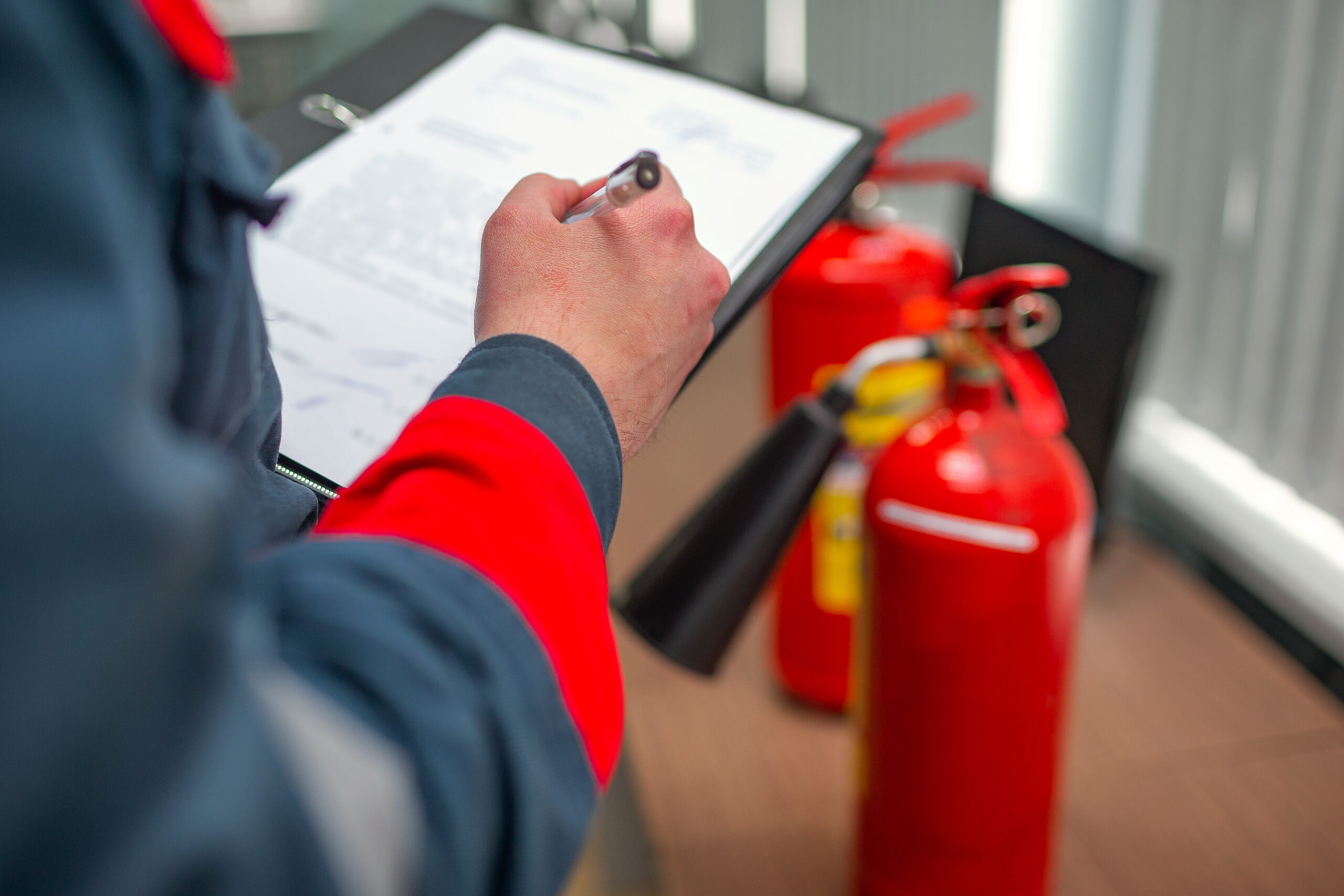
Understanding what certified technicians examine during professional inspections helps you maintain fire extinguishers between service visits. Here’s the comprehensive checklist that guides every Action Fire & Alarm inspection:
Pressure Gauge: Is the Needle in the Green Zone?
The pressure gauge is your fire extinguisher’s most visible health indicator. Technicians verify that stored-pressure units maintain proper charge levels (typically 100-195 PSI depending on the model). A needle in the red zone (too low or too high) indicates the unit needs immediate recharging or may have internal issues. During annual inspection, gauges themselves are tested for accuracy, as faulty gauges can give false readings even when pressure is compromised.
Physical Integrity: Checking for Rust, Dents, or Hose Blockages
Structural soundness is non-negotiable for fire suppression equipment. Professional inspections include:
- Cylinder examination for dents, deep scratches, corrosion, or evidence of impact damage
- Discharge hose inspection for cracks, dry rot, or blockages that could prevent proper agent delivery
- Nozzle assessment to ensure it’s clear and properly attached
- Operating mechanism examination: pull pin, squeeze handle, and discharge valve must function smoothly
Even minor damage can compromise performance during an emergency. Corroded cylinders or damaged hoses are immediately tagged for replacement. This thorough physical assessment is why annual professional inspection exceeds what monthly visual checks can detect.
Accessibility: Is It Blocked by Furniture or Equipment?
Fire codes specify that extinguishers must be visible, unobstructed, and reachable within seconds. During on-site inspections, technicians verify compliance with placement regulations: units should be mounted between 3.5 and 5 feet from the floor (for most models), clearly marked with signage, and positioned no more than 75 feet from any point in the protected area. Common violations include extinguishers hidden behind stored inventory, blocked by furniture, or mounted too high for easy access. These issues represent serious fire hazards and often result in failed safety inspections.
HMIS Label and Tamper Seal: Is the Safety Seal Intact?
The Hazardous Materials Identification System (HMIS) label and operating instructions must be legible, as they provide critical information during emergencies. Equally important is the tamper seal, also called the pull pin tamper seal, which indicates whether the extinguisher has been discharged or compromised. Broken or missing seals require immediate investigation. Even if the unit appears charged, a broken seal suggests possible use or tampering, and the extinguisher must be professionally serviced and recharged before being returned to service. Action Fire & Alarm replaces worn labels and seals as part of standard maintenance.
Why Compliance Matters: NFPA 10 and Local Fire Codes
Fire extinguisher compliance isn’t bureaucratic red tape. It’s a critical element of building safety, legal protection, and financial risk mitigation. Understanding why these standards exist helps contextualize their importance:
Insurance Liability Risks
Insurance providers assess fire protection maintenance when calculating premiums and evaluating claims. Properties with documented annual inspections often qualify for reduced rates, as they demonstrate proactive risk mitigation. Conversely, failure to maintain proper fire suppression equipment can result in denied claims following a fire incident. If an insurer determines that lack of maintenance contributed to property damage or injury, they may refuse to pay, leaving you personally liable for catastrophic losses. For businesses, this liability extends to employee injuries and can trigger OSHA violations with substantial penalties.
OSHA Requirements for Workplaces
The Occupational Safety and Health Administration (OSHA) mandates that employers provide safe working environments, including proper fire protection. OSHA’s standards reference NFPA 10 directly, requiring annual inspections by certified technicians. Workplaces must maintain written records of these inspections, and extinguishers must bear current inspection tags. OSHA violations carry steep fines (thousands of dollars per violation), and repeated non-compliance can result in escalated penalties, criminal charges, and even facility shutdowns. Beyond financial consequences, OSHA violations damage your reputation and can make it difficult to secure contracts or insurance.
The “Peace of Mind” Factor
Beyond legal and financial considerations, proper fire extinguisher maintenance provides invaluable peace of mind. Knowing your fire safety equipment is professionally inspected, properly maintained, and ready to function in an emergency protects lives. Fire incidents escalate rapidly, often reaching dangerous levels within minutes. When seconds count, you need absolute confidence that your extinguishing agents will deploy correctly. Regular professional inspections by certified technicians ensure your fire protection system delivers this reliability. For business owners, this translates to protecting employees and customers. For homeowners, it means safeguarding your family and property.
Protect What Matters Most with Action Fire & Alarm
Fire extinguisher inspection isn’t just about checking boxes. It’s about preserving life safety, protecting your property investment, and ensuring your fire suppression systems function flawlessly when every second counts. Whether you need annual maintenance for your commercial facility, 6-year internal service, or hydrostatic testing for aging equipment, Action Fire & Alarm’s NFPA-certified technicians deliver thorough, professional inspections backed by decades of fire protection expertise.
Don’t wait until a failed inspection or fire emergency exposes gaps in your fire safety compliance. Schedule your professional fire extinguisher inspection today and gain the peace of mind that comes from knowing your fire protection equipment meets NFPA 10 standards, OSHA requirements, and local fire codes. Contact Action Fire & Alarm to discuss your specific needs; we’re here to help you maintain the highest standards of fire safety and risk mitigation.
Ready to ensure your fire extinguishers are inspection-ready?
Contact Action Fire & Alarm today for certified, professional fire extinguisher inspection services.
About Action Fire & Alarm
Action Fire & Alarm is a trusted provider of comprehensive fire protection services, including fire extinguisher inspection, maintenance, and installation. Our NFPA-certified technicians are dedicated to helping businesses and property owners maintain the highest standards of fire safety and regulatory compliance. With expertise in NFPA 10 standards, OSHA requirements, and local fire codes, we deliver reliable, professional service that protects lives and property.
Frequently Asked Questions (FAQ)
How much does a fire extinguisher inspection cost?
Annual inspection costs vary based on the number of units, their type, and your location. Basic annual inspections for standard dry-chemical extinguishers typically range from $15-$35 per unit when performed during a scheduled service visit covering multiple extinguishers. More complex units (specialized extinguishing agents, larger capacities) or services requiring 6-year internal maintenance or hydrostatic testing cost more due to the additional labor and materials involved. Action Fire & Alarm offers competitive pricing with volume discounts for commercial properties maintaining multiple units. Contact us for a customized quote based on your specific fire protection needs. Remember: the cost of inspection is minimal compared to the liability risks and potential losses from non-compliance or equipment failure.
Can I inspect my own fire extinguisher for a business?
No. While business owners can and should perform monthly visual checks, annual inspections for commercial properties must be conducted by certified fire protection professionals. OSHA and NFPA 10 standards explicitly require that annual maintenance be performed by trained and certified persons with appropriate equipment and knowledge. Business owners simply don’t have access to the specialized tools needed for proper inspection: pressure testing equipment, replacement parts, certification tags, and documentation systems. Additionally, only certified technicians can legally affix inspection tags that satisfy Fire Marshal requirements and OSHA compliance audits. Attempting to “self-inspect” for compliance purposes exposes your business to serious liability and can result in failed safety inspections, insurance complications, and regulatory penalties.
How often do fire extinguishers expire?
Fire extinguishers don’t technically “expire” like food products, but they do have service lives that vary by type and maintenance history. Properly maintained extinguishers can last 10-12 years or more before requiring replacement. However, the extinguishing agent, internal seals, and cylinder integrity all degrade over time. This is why the tiered inspection schedule exists: annual inspections catch early issues, 6-year internal maintenance refreshes the agent and seals, and 12-year hydrostatic testing validates cylinder integrity. An extinguisher that fails hydrostatic testing must be permanently removed from service and replaced. Some specialized extinguishing agents have shorter service intervals. Action Fire & Alarm’s technicians will advise you on specific replacement timelines for your equipment during annual inspections.